Navigazione
Accesso utente
SIAMO ANCHE QUI:


Singing in the Garden. Music and culture in the Tuscan Trecento
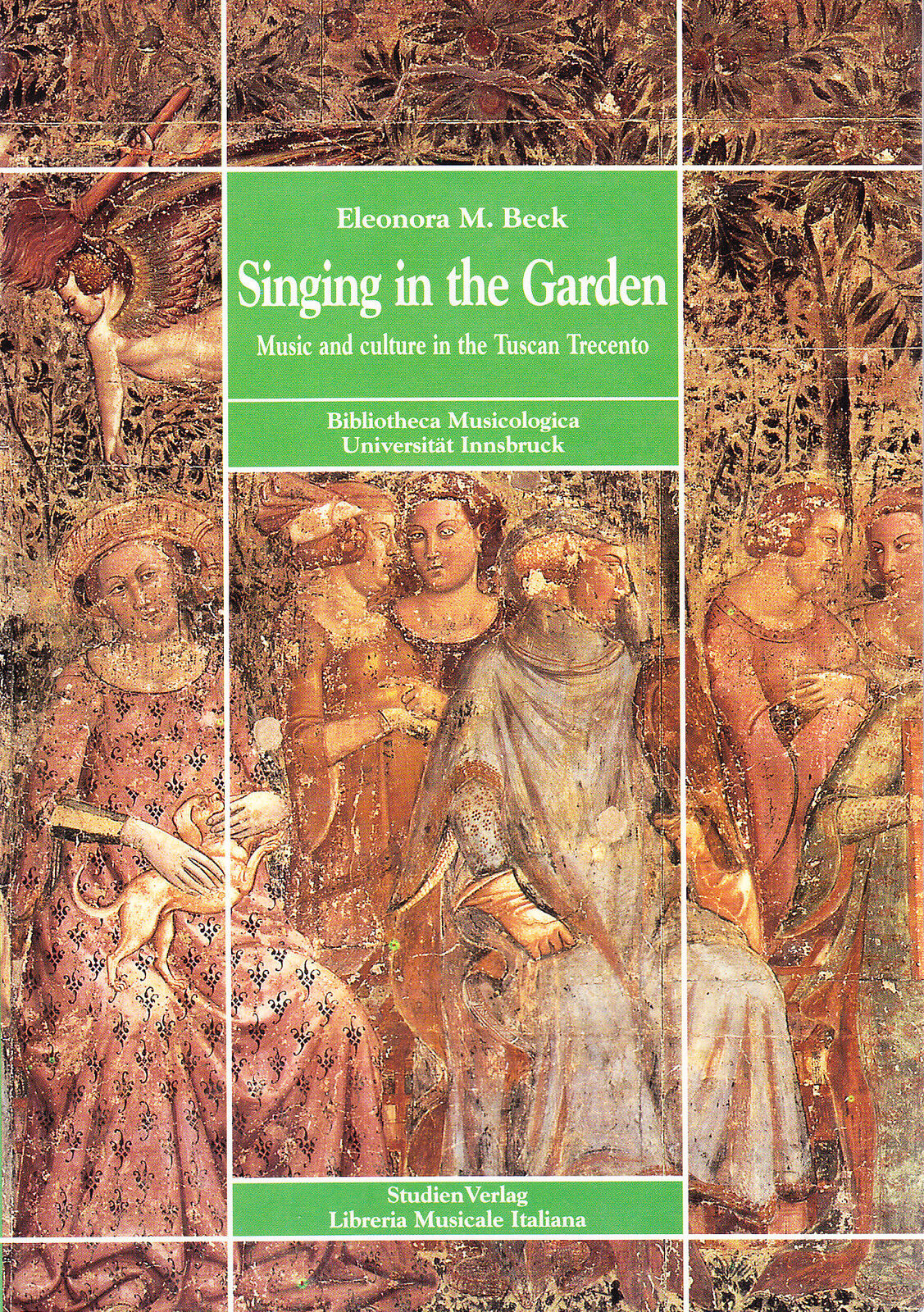
CODICE: ISBN 8870960501 EAN 9788870960501
AUTORE/CURATORE/ARTISTA :
Author: Eleonora M. Beck Edited by: Timan Seebass
EDITORE/PRODUTTORE : LIM Libreria Musicale Italiana
COLLANA/SERIE : Bibliotheca Musicologica-Universität Innsbruck, 3
DISPONIBILITA': Disponibile
TITOLO/DENOMINAZIONE:
Singing in the Garden. Music and culture in the Tuscan Trecento
PREZZO : EUR 26,00€
CODICE :
ISBN 8870960501
EAN 9788870960501
AUTORE/CURATORE/ARTISTA :
Author: Eleonora M. Beck Edited by: Timan Seebass
EDITORE/PRODUTTORE:
LIM Libreria Musicale Italiana
COLLANA/SERIE:
Bibliotheca Musicologica-Universität Innsbruck, 3
ANNO:
1998
DISPONIBILITA':
Disponibile
CARATTERISTICHE TECNICHE:
179 pages
39 black & white illustrations
Paperback
cm 16 x 23 x 1,1
gr 353
DESCRIZIONE:
Publisher's description and from the back cover:
"Singing in the Garden" has an interdisciplinary vision of music history, introducing the fields of painting, literature, and philosophy to create a rich background to Trecento music. Drawing on such masterpieces as Boccaccio's "Decameron" and the frescos of Ambrogio Lorenzetti (Palazzo Pubblico, Siena) and Andrea di Bonaiuto (Santa Maria Novella, Florence), Eleonora Beck explores the meaning of music for the society of the period.
The picture that emerges from her study is of a musical culture that was clearly susceptible to the broad influences of its day and highly distinctive in both the sacred and secular domains, as the masterly compositions of Francesco Landini and Lorenzo Masini well illustrate.
Table of contents:
page 11 Introduction
15 Chapter 1. Source evidence of musical practice in the Tuscan Trecento: archival documents and madrigal texts
35 Chapter 2. The reflection of musical practice in Trecento secular literature: Boccaccio's Decameron
51 Chapter 3. The subjugation of Trecento music to theological and philosophical systems
67 Chapter 4. Music as subject matter in illuminated manuscripts of literary and other content
69 Laudario of the Company of Saint Agnes
79 Decameron
82 Chronicles
82 Florence
85 Lucca
92 Divine Comedy
95 Squarcialupi Codex
105 Chapter 5. Representations of secular music in fresco painting of the Trecento
106 Ambrogio Lorenzetti, Effects of Good Government in the City and Country (1337-1340), Siena
115 Bonamico Buffalmacco, Triumph of Death (1330-1345), Pisa
124 Andrea di Bonaiuto, Allegory of the Dominican Order (1366-1368), Florence
133 Chapter 6. Exploration of parallels between the arts - secular music as culture
153 Appendix. Musical references in the Cornice of Giovanni Boccaccio's Decameron
157 Bibliography
175 Index
GENERE: Libri ,Saggi ,